
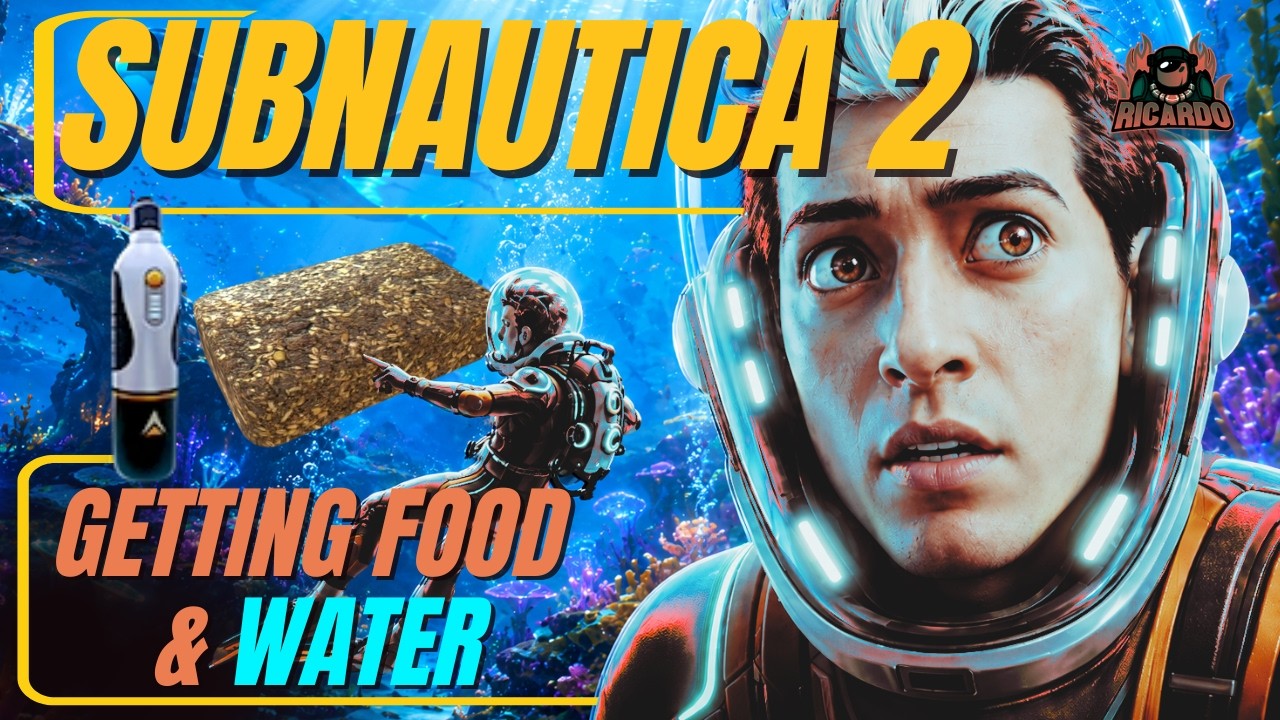

Hunger in Subnautica 2 is easy to overlook in the opening hours — there is so much to explore, so many blueprints to scan, and so many resources to gather that managing food often falls down the priority list until it is suddenly urgent. The alien ocean is beautiful and endlessly interesting, and the survival mechanics are designed to keep pressure on players without overwhelming them. But if you ignore hunger too long, your early game playthrough can go sideways quickly. This guide covers how to find food in the early game, how to manage hunger efficiently, and how to stop survival from getting in the way of exploration.
How Hunger Works in Subnautica 2
Subnautica 2 uses a survival system where food and water both need to be managed regularly. The hunger bar depletes over time as you play, and if it reaches zero, your health begins to take damage. In the early game — before you have cooking equipment, a proper base, or established food sources — managing hunger requires a basic awareness of what is edible in the starting biome and where to find it.
The Subnautica series has always balanced survival mechanics carefully. Hunger and thirst exist to create low-level ongoing pressure without dominating the game. The goal is that managing food and water requires attention and occasional focused effort but does not consume the majority of your play time. Getting your early food sources established means the survival system does its job — keeping you engaged — without turning into a chore that interrupts every exploration run.
What You Can Eat in the Early Game
The early-game biome in Subnautica 2 contains edible resources that can be gathered without any crafting equipment. Fish are the most accessible early food source. Several creature types in the starting biome can be caught and eaten raw, and while raw fish is not the most satisfying meal, it serves the immediate purpose of keeping hunger at bay while you focus on getting your first tools crafted.
Plant-based food sources also exist in the alien ocean. Certain flora in the starting biome produce edible material that can be collected simply by interacting with the plant. These plant resources are often easier to gather repeatedly than fish, since they respawn in fixed locations and do not require chasing down moving creatures.
The escape pod’s Medical Kit Fabricator is not a food source in the traditional sense, but it is worth understanding what equipment is built into your starting location. In the original Subnautica, the Lifepod’s Fabricator could be used to cook fish once you had caught them. In Subnautica 2, your starting pod’s equipment provides the initial foundation for processing whatever food you find.
Catching Fish in the Starting Biome
Fish in Subnautica 2 swim through the starting biome in groups and individually. Catching them requires you to get within reach and interact to grab them — the same basic mechanic as the original Subnautica. Small, passive fish near the surface and in the shallower parts of the biome are the easiest to catch, and they tend to respawn reasonably quickly, making the same area worth returning to for multiple food-gathering runs.
Avoid chasing fish into deeper water when your oxygen supply is limited. The fish that are easiest to catch in the starting biome are in shallow-to-mid depth ranges, and the oxygen cost of a surface-level fish-catching run is much lower than attempting the same thing at depth. Efficient fish catching in the early game is about location and patience more than speed — approach slowly, stay aware of your oxygen, and grab what is within reach rather than sprinting after specific fish.
Once caught, fish go into your inventory. If you have access to a Fabricator or cooking equipment, cook the fish before eating it to get better nutritional value. Raw fish satisfies hunger but cooked fish typically provides more food value and may also address thirst depending on the specific fish type. Getting your first Fabricator cooking capability unlocked early means that your food-gathering runs become more efficient — fewer fish needed per play session to keep hunger managed.
Managing Water and Thirst Alongside Food
In the Subnautica series, thirst and food are managed separately. In Subnautica 2, water sources in the early game include filtered salt water (processed through available equipment), certain plant types that contain water, and the biological water content of cooked fish. The water supply situation in the early game is similar to food — there are accessible sources nearby, and the system is designed to be manageable without requiring complex or time-consuming solutions.
The general principle for managing both food and water in the early game is to gather small amounts regularly rather than waiting until both are critically low. Checking your survival bars every time you return to the escape pod gives you a simple routine for staying on top of both needs without letting either become an emergency.
Setting Up a Sustainable Food System
Once you have your core tools crafted and your first base or habitat module in place, setting up a more sustainable food system becomes practical. Base-building in Subnautica 2 includes the ability to create food storage, cooking facilities, and eventually fish farming capabilities. These systems are more advanced and require blueprint scanning and crafting progression to reach, but they significantly reduce the time you need to spend on food management once they are in place.
In the early hours before you have those systems available, the practical approach is simple: catch fish in the starting biome, use the Fabricator to cook them if possible, store what you do not immediately need, and keep an eye on hunger during long exploration runs. The starting biome has enough edible resources to sustain you indefinitely if you engage with them regularly — food should never be a critical emergency in a properly managed early game.
Common Early Food Mistakes
The most common food-related mistake in early Subnautica 2 is forgetting to eat during long exploration runs. When you are absorbed in scanning a new area, gathering resources, or following the narrative of radio messages, it is easy to let hunger creep up. Building the habit of checking your survival bars every time you surface is the simplest way to prevent hunger from becoming a sudden problem mid-dive.
The second common mistake is not storing cooked food for later. If you catch several fish and cook them all at once, store the extras rather than eating immediately. Having a small supply of cooked fish in your escape pod locker means that returning from a dive gives you immediate access to food without requiring another fish-catching run before you can continue exploring.
For more Subnautica 2 survival basics and beginner tips, visit the Subnautica 2 hub — everything you need to survive and thrive in the alien ocean.
📺 Subscribe to Ricardo’s Gaming on YouTube for Subnautica 2 survival guides, beginner tips, and Early Access gameplay coverage.
Related Guides
- Subnautica 2 Early Access Hotfix 3 Explained: DLSS 4.5, Creature Balance and Crash Fixes
- Subnautica 2 May 14 Early Access Launch — Everything Confirmed
- 7 Things to Know Before Subnautica 2 Early Access — Release Time, Platforms, Co-op and More
- Subnautica 2 Hits 5 Million Wishlists — What It Means for Early Access
More Subnautica 2 Guides and Updates
- Subnautica 2 Beginner Survival Guide
- Subnautica 2 First 90 Minutes Review
- Subnautica 2 Early Access — Ricardo Plays
- Launch Pod Opening Sequence Guide
- Starter Tools Guide
- Copper and Titanium Locations
- Find Silver and the Air Tank
- Find Food Early Game
- Food Sources — Survive First Days
- Base Building Guide
- 5 Million Wishlists Milestone
- 7 Things to Know Before Early Access
- May 14 Early Access Launch
- Early Access Reaction
- PC System Requirements
- First Hotfix Review
- Hotfix 2 Patch Notes
- Creature Balance Debate
- Hotfix 3 — DLSS and Creature Balance
- Subnautica 2 Hub — All Guides