
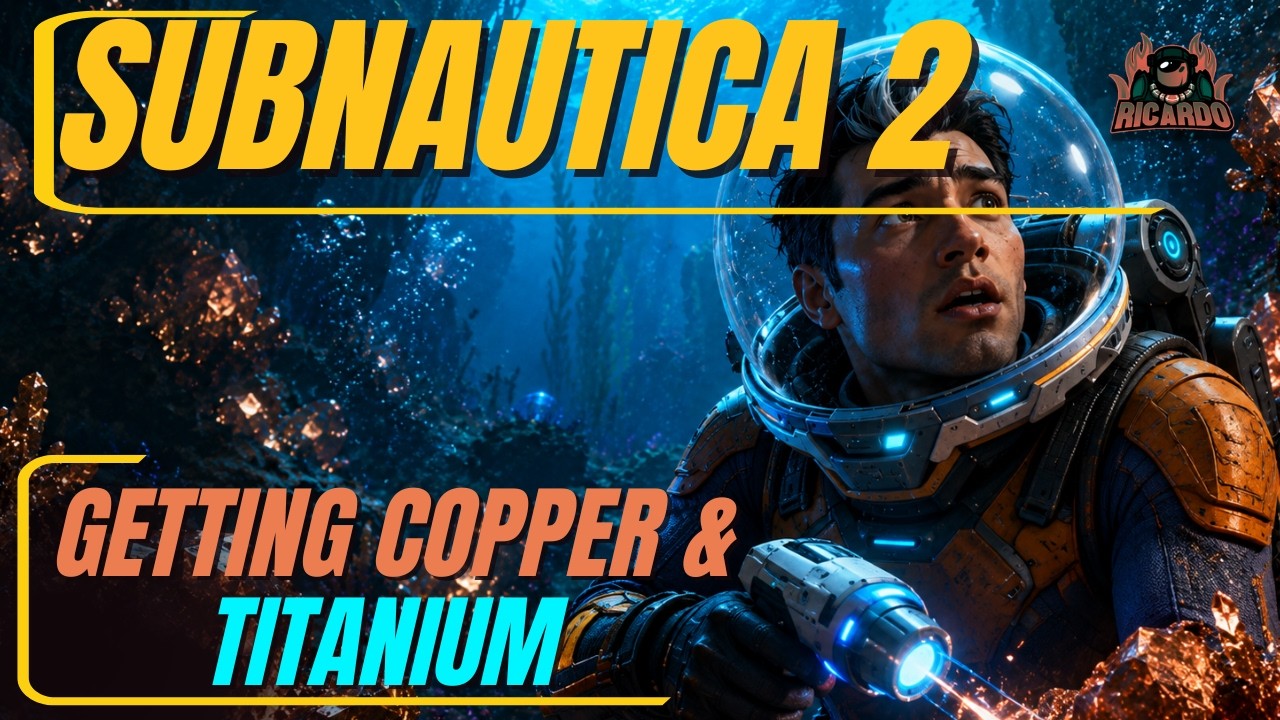

Copper and Titanium are the two most important early-game crafting resources in Subnautica 2. Nearly every piece of equipment you will craft in the first several hours of the game requires one or both of these materials. Knowing where to find them reliably, and how to gather them efficiently, is the difference between a smooth early-game progression and spending significant time wandering the alien ocean without direction. This guide covers where to find Copper and Titanium, how to recognise the outcrops that contain them, and how to make your resource runs as productive as possible.
Why Copper and Titanium Are Essential
Copper Ore and Titanium feed into almost everything you build in the early game. The Survival Multi-Tool, the Scanner, the Fabricator’s first tier of equipment, battery components, early base modules, hull reinforcement materials, and tool upgrades all draw on these two resources. Building a steady supply of both from the very first minutes of the game puts you in a strong position for every subsequent crafting step.
Copper specifically is needed for electrical components — batteries, wiring, and any technology that requires power to function. Titanium provides the structural component for physical items — hull pieces, tool casings, equipment frames. In this way, they are complementary rather than interchangeable: you typically need both, and a shortage of either creates a crafting bottleneck that slows down your entire progression.
Where to Find Titanium in the Starting Biome
Titanium comes from two primary sources in the early game. The first and most accessible source is limestone outcrops — small rocky formations scattered across the ocean floor of the starting biome. These outcrops appear as slightly lighter or more textured rocks compared to the surrounding seafloor. When broken open with the Multi-Tool, they typically yield Titanium fragments, sometimes alongside other materials like Copper or Quartz.
The second source of Titanium in the early game is salvageable wreckage. Pieces of broken technology, structural debris, and wrecked equipment scattered around the starting area can often be broken down into Titanium using the Multi-Tool. This is particularly useful in areas near the starting escape pod, where some wreckage from the initial descent may be accessible without requiring deep exploration.
Titanium outcrops respawn over time, so areas you have already mined can become productive again after a certain period has elapsed. Establishing a mental map of the outcrop-rich zones near your starting location allows you to run efficient gathering loops without needing to push into unfamiliar territory every time you need to stock up.
Where to Find Copper Ore in the Starting Biome
Copper Ore appears in the same limestone outcrops as Titanium, often from the same rock formation in the same dive. However, Copper also appears as standalone deposits in certain sandy or sediment-heavy areas of the biome — slightly larger mineral outcrops with a distinctive orangey-brown colour that distinguishes them from the neutral grey of standard rock outcrops.
The colour distinction is the most reliable visual identifier for Copper. When you are swimming across the seabed and scanning for resources, the Copper outcrop colouring should stand out against the surrounding terrain. Approach it, use the Multi-Tool to break it down, and you will collect Copper Ore fragments that go directly into your inventory.
Copper can also be found by breaking open certain types of limestone outcrops that appear more common in the transition zones between biomes — the edges where one biome type meets another. These boundary areas often have denser resource deposits than the interior of any single biome, and are worth exploring specifically for Copper.
Efficient Gathering Strategies
The most efficient approach to early resource gathering in Subnautica 2 is to combine Copper and Titanium runs into the same dive rather than making separate trips for each material. Since both resources appear in the same type of outcrop and the same general areas of the biome, there is no reason to limit a gathering run to a single material type. Dive with the intention of filling your inventory with whatever useful resources you encounter, and only return to the escape pod when inventory space runs out or oxygen becomes a concern.
Use the Ping system to mark resource-rich areas you want to return to. If you find a section of the biome with particularly dense outcrop coverage, marking it means you can navigate back quickly on subsequent dives without needing to re-explore to find it. Over time, you will build a working map of the highest-yield resource zones near your base of operations.
The Scanner should be active during every gathering run. Scanning Copper and Titanium outcrops does not just give you the resources — it may also unlock or contribute to blueprint progress, depending on what the scan reveals about the material properties. Scanning everything you interact with costs nothing and frequently yields valuable information and progression benefits.
Managing Inventory Space
One of the practical challenges with gathering Copper and Titanium early in Subnautica 2 is that inventory space fills up quickly. Both resources take up inventory slots, and if you are also carrying Scanner data items, food and water resources, and crafting components from other sources, you will find yourself returning to the escape pod more frequently than you would like.
The solution is to prioritise Copper and Titanium during dedicated resource runs rather than trying to gather everything simultaneously. On a focused Copper and Titanium run, leave space by dropping or storing lower-priority items before diving. Once you have built a small locker or storage system, use it to buffer materials between Fabricator crafting sessions so that each new dive adds to a growing stockpile rather than immediately feeding into one specific crafting task.
What to Craft First With Copper and Titanium
Your first priority with gathered Copper and Titanium should be the Survival Multi-Tool if you do not already have one, followed by the Scanner. Both of these are covered in more detail in the Subnautica 2 starter tools guide. After those two items, the next crafting priorities are batteries (essential for powering tools and future equipment), early base-building components if you plan to establish a habitat, and the various upgrade paths that open up once the Scanner has been used to progress through blueprint discovery.
Keeping a comfortable buffer of both Copper and Titanium in your storage at all times is a good habit to develop. Running out of either material at a critical moment — mid-base-build or partway through a tool upgrade — is easily avoidable if you treat resource gathering as an ongoing activity rather than something that happens only when you run out.
For more early-game crafting and resource guides, visit the Subnautica 2 hub — your complete guide to surviving the alien ocean in Early Access.
📺 Subscribe to Ricardo’s Gaming on YouTube for Subnautica 2 resource guides, crafting tips, and Early Access survival content.
Related Guides
- Subnautica 2 Early Access Hotfix 3 Explained: DLSS 4.5, Creature Balance and Crash Fixes
- Subnautica 2 May 14 Early Access Launch — Everything Confirmed
- 7 Things to Know Before Subnautica 2 Early Access — Release Time, Platforms, Co-op and More
- Subnautica 2 Hits 5 Million Wishlists — What It Means for Early Access
More Subnautica 2 Guides and Updates
- Subnautica 2 Beginner Survival Guide
- Subnautica 2 First 90 Minutes Review
- Subnautica 2 Early Access — Ricardo Plays
- Launch Pod Opening Sequence Guide
- Starter Tools Guide
- Copper and Titanium Locations
- Find Silver and the Air Tank
- Find Food Early Game
- Food Sources — Survive First Days
- Base Building Guide
- 5 Million Wishlists Milestone
- 7 Things to Know Before Early Access
- May 14 Early Access Launch
- Early Access Reaction
- PC System Requirements
- First Hotfix Review
- Hotfix 2 Patch Notes
- Creature Balance Debate
- Hotfix 3 — DLSS and Creature Balance
- Subnautica 2 Hub — All Guides