
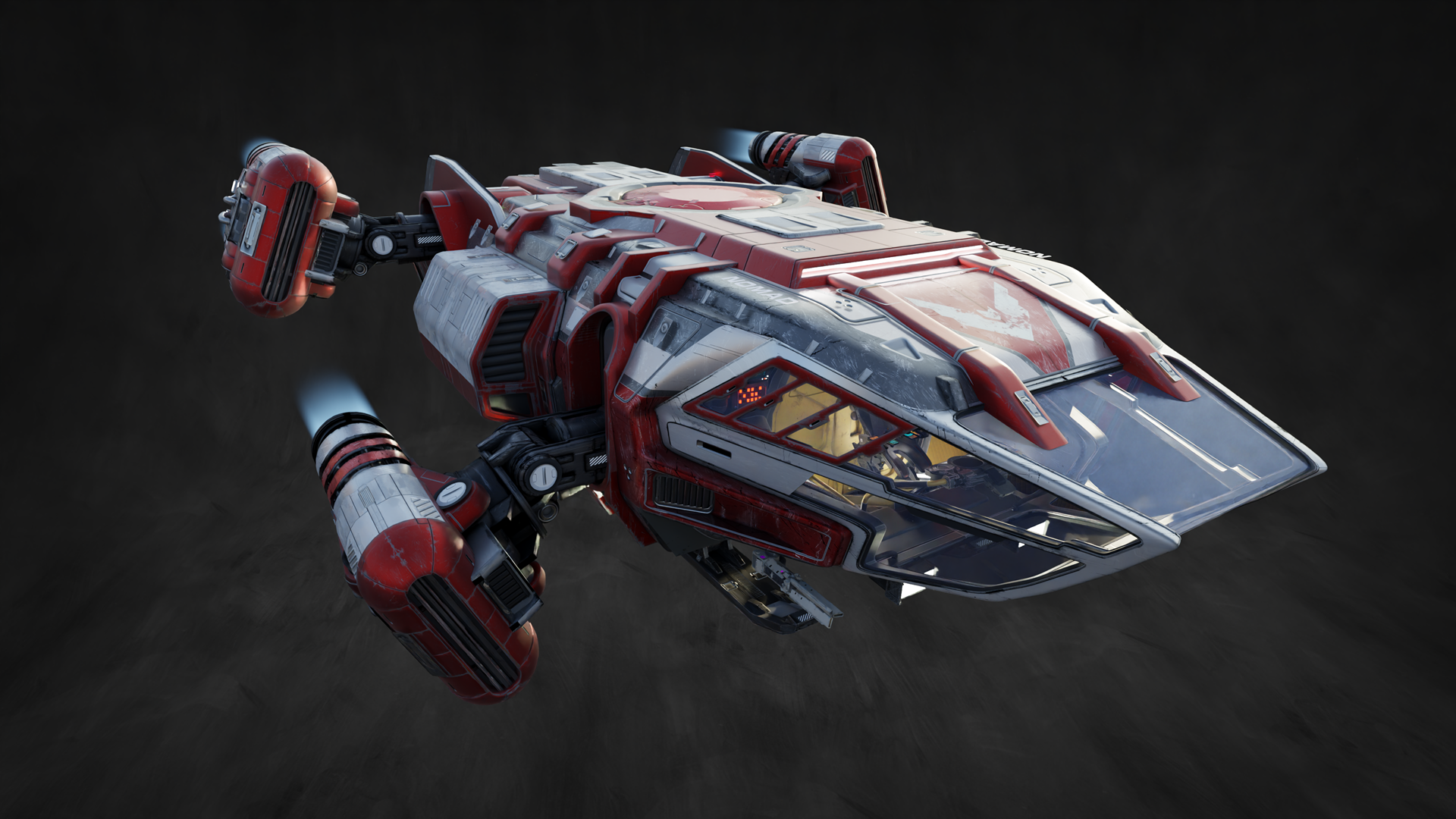

Frontier Developments has officially revealed the Nomad, the next new vessel coming to Elite Dangerous, and this one is not just another shipyard addition. The Nomad is a small, compact, ship-launched vessel designed for planetary surface exploration, and for Commanders who spend their time hunting organics, scanning biological signals, and chasing exobiology payouts, this could be one of the most important additions to Elite Dangerous Odyssey in years.
You can watch my full video breakdown here:
For more Elite Dangerous guides, news, ship breakdowns, and gameplay commentary, visit www.ricardosgaming.com and www.ricardosgaming.co.uk.
What Is the Nomad in Elite Dangerous?
The Nomad is a new ship-launched vessel coming to Elite Dangerous. Unlike a traditional full-size starship, the Nomad is designed to be deployed from a larger exploration ship, giving Commanders a new way to approach planetary surfaces.
That is the key point. The Nomad is not being positioned as a replacement for your main exploration ship. Instead, it appears to act as a specialised surface exploration craft. Your larger vessel can remain above the planet, while the Nomad is deployed to get closer to organics and difficult terrain.
For explorers and exobiologists, that is a major shift. One of the biggest frustrations in Elite Dangerous exobiology is not finding biological signals. It is landing close enough to them. Large ships can struggle with uneven terrain, awkward slopes, rocky areas, and tight landing zones. The Nomad looks like Frontier’s answer to that problem.
Built for Planetary Surfaces
Frontier describes the Nomad as rugged and compact, built specifically to explore planetary surfaces. That immediately separates it from normal ship-launched fighters, which are typically associated with combat, defence, or short-range tactical support.
The Nomad is different. This is a vessel designed around exploration and access.
Its most obvious design feature is the use of narrow, helicopter-inspired landing skids. These give the Nomad a smaller landing profile than larger ships, allowing it to perch on more uneven terrain. In practical terms, that could mean fewer frustrating moments where you are hovering over a biological site while the game refuses to give you a valid landing spot.
Anyone who has done serious exobiology knows that pain. You find the organics. You descend. You line up the perfect landing. Then the terrain turns red, the ship complains, and suddenly you are forced to land hundreds of metres away and jog back like a space tourist who forgot the SRV.
The Nomad could make that loop much smoother.
Why the Nomad Matters for Exobiology
Exobiology has become one of the strongest gameplay loops in Elite Dangerous Odyssey. It gives explorers a reason to leave the cockpit, walk across alien worlds, scan lifeforms, and sell genetic data through Vista Genomics. It can also be extremely profitable, especially when first-discovery bonuses are involved.
But the loop has always had one obvious weakness: movement between samples.
To complete an organic scan, players need multiple samples from the same species at sufficient distance from each other. That means landing, walking, scanning, relocating, scanning again, and repeating the process until the sample is complete. On flatter worlds this can be fine. On rough terrain, it becomes a slog.
The Nomad directly targets that pain point. By letting Commanders deploy a small surface-focused vessel from a larger ship, Frontier is giving exobiologists a tool for getting closer to hard-to-reach organics without needing to reposition the main ship every time.
This is especially useful for players who prefer larger exploration ships. Big vessels are great for range, module space, repair options, SRV bays, and long-term expeditions, but they are not always ideal when trying to land beside a patch of alien biology on uneven ground. The Nomad could let players keep the advantages of a larger exploration ship while gaining the landing flexibility of a much smaller craft.
A Perfect Partner for the Caspian Explorer?
Frontier specifically frames the Nomad as offering more flexibility to Commanders using larger exploration ships such as the Caspian Explorer. That is important because it positions the Nomad as part of a wider exploration ecosystem rather than just a novelty vehicle.
The Caspian Explorer and similar large exploration ships can carry the tools needed for long-distance travel, but their size can make surface work awkward. The Nomad appears to solve that by acting as a deployable scout vessel.
In effect, your main ship becomes the expedition base. The Nomad becomes the field craft.
That is a great design idea. It gives bigger exploration ships more practical value for exobiology and creates a more believable expedition workflow: arrive in system, survey from orbit, locate biologicals, deploy the Nomad, land closer, scan, return, and move on.
That feels much more like a proper exploration career.
Pivoting Engines and Landing Skids
One of the most interesting design details is that the Nomad’s engines pivot when landing and sit just above the ground. Combined with the helicopter-style skids, this gives the vessel a very distinctive surface operations look.
This is not just visual flair. It reinforces the idea that the Nomad is designed to operate close to planetary terrain. The pivoting engines suggest vertical control, compact landing behaviour, and practical use in tight or uneven environments.
It also makes the Nomad feel different from a standard ship-launched fighter. This is not just a small combat craft with a different paint job. It looks like a purpose-built planetary scout.
That matters because Elite Dangerous ships are at their best when their role is clear. The Type-9 is a space truck. The Fer-de-Lance is a duellist. The Diamondback Explorer is a budget exploration legend. The Mandalay is a modern long-range favourite. The Nomad could become the exobiologist’s field vessel.
When Is the Nomad Coming to Elite Dangerous?
The Nomad is planned to launch in ARX Early Access alongside the Operations update on 30 June. That timing is interesting because Operations is already focused on expanding multiplayer mission gameplay and giving Commanders more structured activities. Launching the Nomad alongside that update gives Elite Dangerous another major talking point for players interested in exploration and Odyssey surface gameplay.
For some players, ARX Early Access will be an instant purchase. For others, the real test will be how useful the Nomad feels once it is in the live game. The big questions are obvious: how is it deployed, what ships can carry it, how far can it operate from the mothership, can players disembark from it, how durable is it, and how well does it handle different gravity conditions?
Those details will determine whether the Nomad is a useful exploration tool or just a cool-looking side craft.
Final Thoughts
The Nomad could be a significant step forward for Elite Dangerous exobiology. It directly supports the gameplay loop that many Odyssey explorers already enjoy: finding biological signals, landing close, scanning organics, and pushing deeper into the black.
If Frontier gets the handling, deployment, and landing behaviour right, the Nomad may become essential kit for serious exobiologists, especially those flying larger exploration ships. It gives Commanders a reason to rethink their builds, revisit surface exploration, and approach planetary biology in a more flexible way.
This is not just another ship.
It is a new kind of exploration tool.
The surface was calling, and now the Nomad looks ready to answer.
Watch the full video breakdown here: https://youtu.be/xS–r3upHjo
For more Elite Dangerous coverage, visit www.ricardosgaming.com and www.ricardosgaming.co.uk.
Related Guides
- Elite Dangerous Guardian Blueprint Farming Guide: Unlock AX Modules Fast
- Elite Dangerous Exploration Guide 2026: Explore and Make Millions
- Elite Dangerous Laser Mining Guide 2026: Best Ships Hotspots and Credits Per Hour
- Elite Dangerous Type-11 Prospector Review: Do Not Buy the Wrong Edition