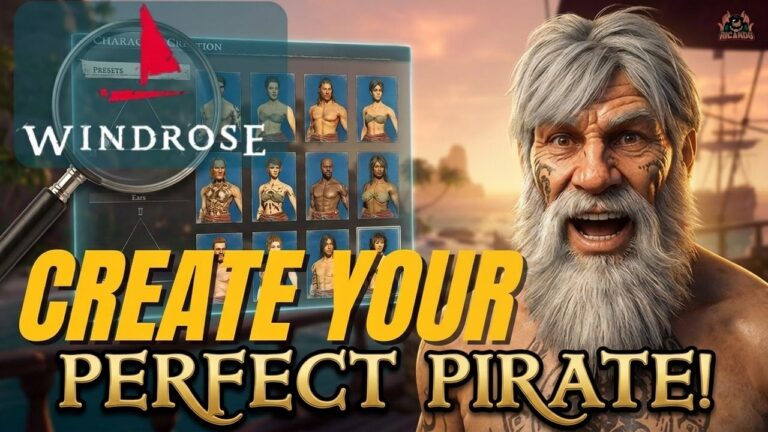


Starting out in Windrose? These are the most common mistakes new players make — and how to avoid every one of them. Windrose is a pirate sailing strategy game that blends ship combat, exploration, and crew management across a vast ocean world. If you are just starting out, understanding the foundational systems early will save you significant frustration later in the game.
What is Windrose?
Windrose is a sailing strategy and adventure game set in a world of pirates, merchants, naval powers, and ocean exploration. Players build and captain their own ship, recruit a crew, engage in ship-to-ship combat, manage trade routes, and carve out a reputation across a dynamic open-world ocean. The game combines tactical naval combat with RPG-style character progression, exploration, and the classic pirate fantasy of ruling the seas on your own terms.
The game rewards patience and preparation. New players who rush into combat without understanding their ship’s capabilities or crew’s skills tend to find early game progression punishing. Ricardo’s beginner guide focuses on building the right habits from the start — habits that make the entire experience more enjoyable and sustainable.
Mistake 1 — Not Understanding Your Ship’s Role
One of the most common beginner mistakes in Windrose is trying to do everything with one ship early on. Windrose ships have distinct roles — some are built for speed and raiding, others for cargo capacity and trading, and others still for heavy combat. Trying to build a jack-of-all-trades ship in the early game usually results in a vessel that is mediocre at everything and excellent at nothing.
Ricardo recommends committing to a ship role early and upgrading toward it consistently. If you want to be a raider, prioritise speed and weapon range. If trading is your goal, maximise cargo holds and protection against small interceptors. Defining your playstyle early and building consistently toward it makes progression much smoother than scattered upgrades across all systems.
Mistake 2 — Ignoring Crew Management
Your crew is your most important resource in Windrose. Crew members have individual skills, morale levels, and loyalty ratings that directly affect ship performance. Combat effectiveness, sail speed, repair efficiency, and cargo loading times all depend on having the right crew in the right roles. New players often fill crew slots with any available sailors rather than recruiting for specific skill sets.
The crew morale system also matters more than it initially appears. Low morale reduces performance across all ship systems and increases the risk of desertion or mutiny. Keeping your crew paid, fed, and respected through strong leadership choices maintains the morale levels you need for peak performance in difficult combat encounters.
Mistake 3 — Picking Fights You Cannot Win
Naval combat in Windrose is asymmetric — a well-equipped warship can destroy a merchant vessel in seconds, but the same warship will be destroyed by a naval patrol fleet if caught in the open. Understanding the threat hierarchy at sea and knowing which fights to take versus which to avoid is a skill that separates experienced pirates from those who respawn repeatedly.
Use your ship’s intelligence system to assess enemy strength before engaging. The difference between a manageable fight and an unwinnable one is often just the number of escorts around a target. Patience — waiting for isolated targets, planning escape routes, and knowing when to disengage — is more valuable than aggressive courage in Windrose’s early game.
Essential Early Game Priorities
Ricardo’s beginner guide focuses on a specific set of early game priorities that set you up for long-term success. First is establishing a reliable income stream — whether through trading, raiding specific target types, or bounty hunting — before investing in expensive upgrades. Second is building reputation with at least one faction that gives you safe harbour access — being hunted by all factions simultaneously makes the game significantly harder.
Third is understanding the wind system deeply. Windrose’s sailing mechanics model real wind directions and their effect on ship speed and manoeuvrability. Ships moving with the wind are significantly faster and more responsive than those sailing against it. Combat positioning, approach angles, and escape routes should all be planned with wind direction in mind — it is one of the most important tactical variables in ship-to-ship encounters.
Navigation and World Exploration
The Windrose world map contains dozens of islands, ports, hidden coves, and points of interest that reward exploration. Early exploration focused on discovering all available ports — even those in hostile faction territory — gives you a comprehensive picture of trade route options, safe harbours, and potential raid targets. Map knowledge is power in Windrose, and players who explore broadly early have a significant advantage over those who stay close to their starting area.
Treasure maps, rumours from taverns, and faction quest lines all lead to unique discovery opportunities that bring substantial rewards. Building time for exploration into your early game routine ensures you are not missing out on these sources of income and progression that players who focus purely on combat or trade tend to overlook.
More Windrose Content on Ricardo’s Gaming
Ricardo’s Windrose coverage is growing — the beginner guide is the foundation, with more character build guides, ship build analysis, and gameplay content planned. Visit the Windrose hub page for all Windrose content as it is added to the channel.
📺 Subscribe to Ricardo’s Gaming on YouTube for Windrose guides, Star Trek Voyager walkthroughs, Elite Dangerous content and more — new videos every week.